A tribute to Jack Bruce.

A collection of useful Excel and science/engineering related links that I have discovered/rediscovered recently:
Craig Hatmaker’s Beyond Excel:
Everyone knows Microsoft Excel is a powerful data mani-pulation engine, but data lives in databases and only a few Excel experts know how to exploit this natural synergy.
snb’s VBA for Smarties:
This website is dedicated to the use of Visual Basic for Applications (VBA). VBA is the programming language of Microsoft’s Office and all other software that makes use of it.
VBA has therefore a large amount of ‘libraries’. Every library contains methods that are specifically suited for each program.
There’s also a specific VBA library,that contains methods that can be used by every VBA-fit program.VBA offers opportunities to communicate between software: from one program you can give instructions to another using VBA. Task integration is a VBA benefit that can’t be achieved using the User Interface.
MIT OpenCourseware:
“The idea is simple: to publish all of our course materials online and make them widely available to everyone.”
Dick K.P. Yue, Professor, MIT School of Engineering
And a collection from Alfred Vachris:
This short primer on Python is designed to provide a rapid “on-ramp” to enable computer programmers who are already familiar with concepts and constructs in other programming languages learn enough about Python to facilitate the effective use of open-source and proprietary Python-based machine learning and data science tools.
These are some mathematics investigations I have pursued over the years. They may be of some interest to teachers, students, or hobbyists. I try to convey a conceptual understanding, usually without rigorous proof. Some of the lessons are accompanied by questions and suggestions for extensions.
Visiting England’s New Forest region recently reminded me of the old bridge at Fordingbridge:
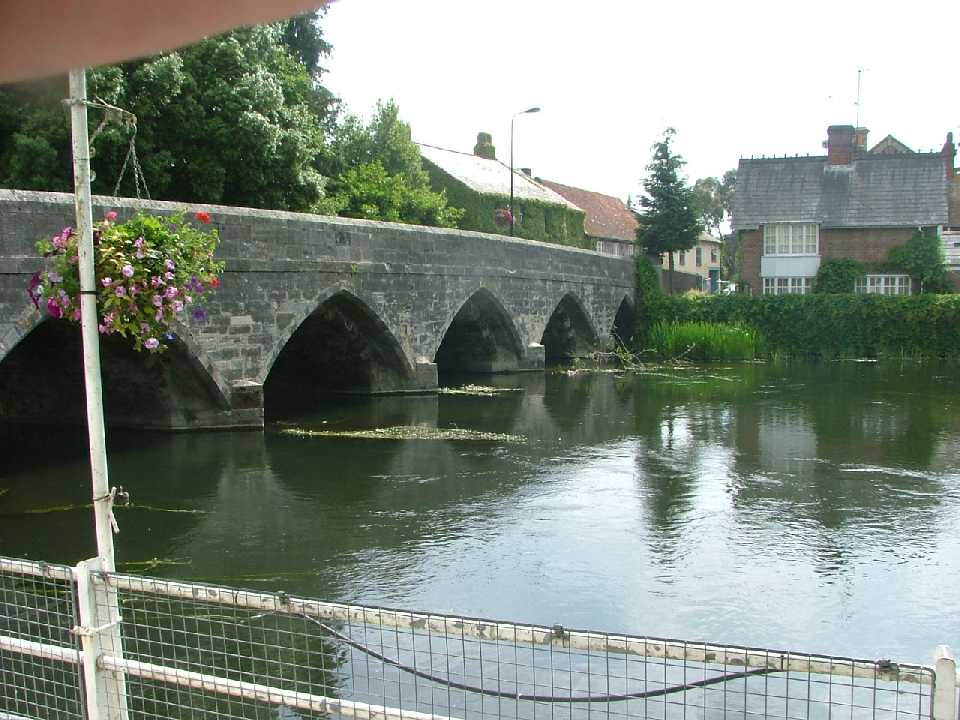
The gothic arches of this bridge bear a striking resemblance to the Admiral’s Bridge at Palermo, featured in the previous post, which made me wonder if there was any possibility of a connection between the builders of the two structures. According to Wikipedia the original bridge was built before 1252, when a grant was rewarded for its repair. Other sources give the age as about 1200, but it seems at least possible that the original structure was constructed substantially earlier than this.
The arches visible at the face of the structure are a 19th Century addition, but these were constructed with a slightly larger span, leaving the original structure clearly visible:
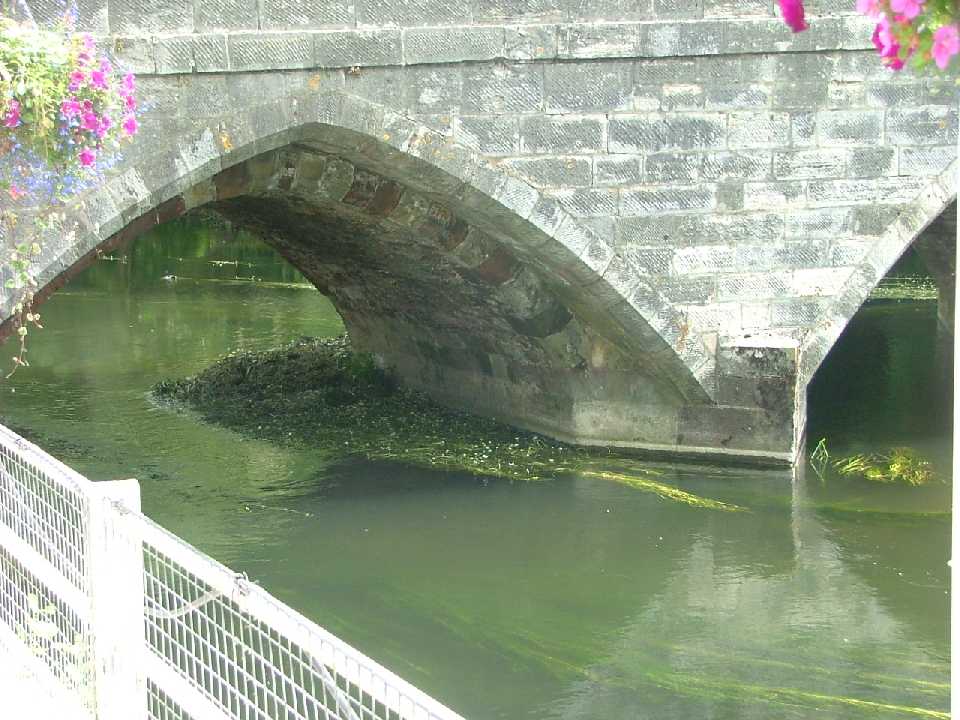
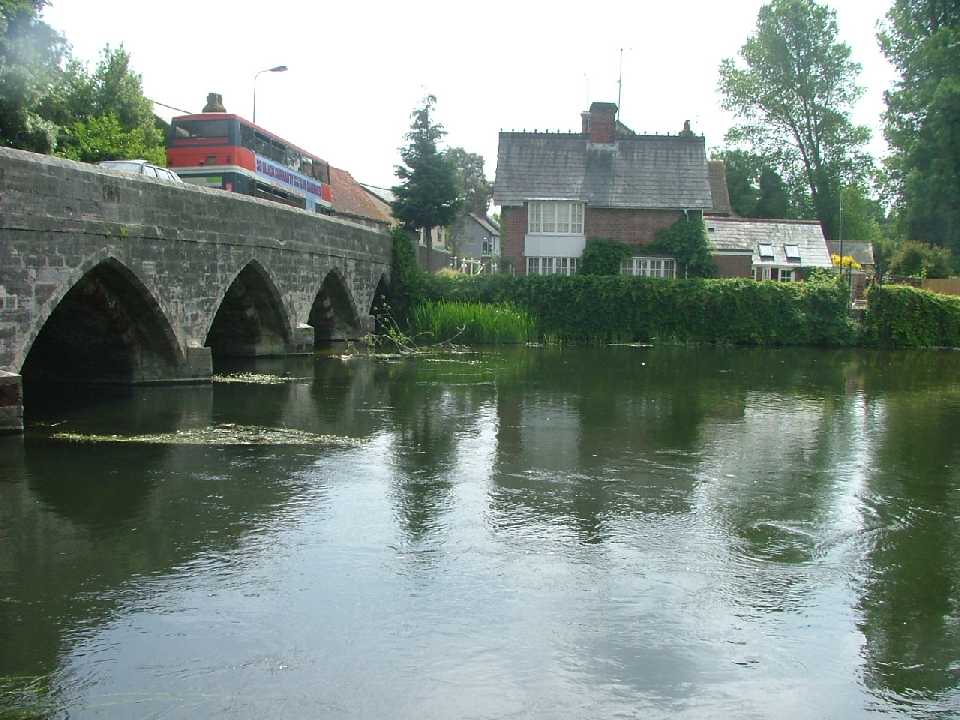
Unlike the bridge in Palermo, the Fordingbridge structure is still in unrestricted use, and carrying modern heavy vehicles.
Searching for bridges of a similar age and style in the region I found the Ayleswade Bridge, which is recorded as being built in c 1244, also known as the Harnham Bridge:
http://www.british-history.ac.uk/image.aspx?compid=129801&filename=fig211.jpg&pubid=1319
It perhaps seems fanciful to suggest that there might be any connection between structures built in England and in Sicily, but at the time of the construction of the Palermo bridge both England and Sicily were under Norman rule:
The Ponte dell’ Ammiraglio (Admiral’s Bridge) in Palermo, Sicily, built from 1125-1135 (or 1113, according to the Italian Wikipedia), is one of the oldest surviving post-Roman era arch bridges in Europe. The bridge has been restored and surrounded by a new park, but also being surrounded by busy Sicilian roads, cut off from its original purpose, and outside the main tourist area, it is little visited.


There is also little information about this bridge on the Internet (at least in English), but I did find a lengthy discussion on the history of pointed arches, and where they came from, which is well worth a read at:
Nexus Network Journal (architecture and mathematics on-line)
Thanks to the comment from Pier below, a You tube video of an event on the bridge:
Following a comment here: ExcelPython2, Alglib and Spline-Matrix update I have updated the VBA and Python code, and added a missing Python module to the download zip file. See the earlier post for details of installation and use, or download the revised files from:
The revised spreadsheet should work with 32 bit Excel, provided the instructions for installing Python (including Numpy) and Alglib are followed.


 Newton Excel Bach, not (just) an Excel Blog

