Elegant Solutions – Why does this balance?

From the Eng-Tips forum

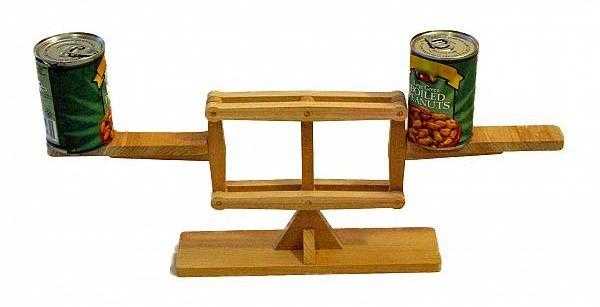
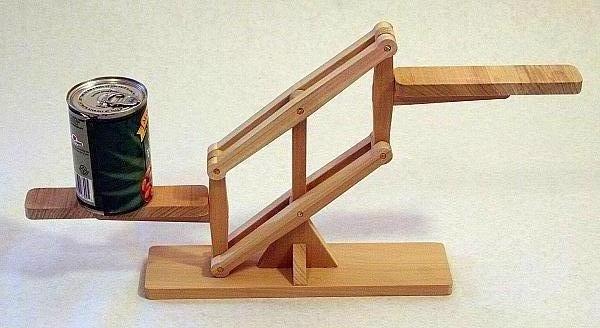
Why does the mechanism shown below balance when the load applied to each platform is the same, even when the lever arms from the pivot are different?

Unequal loads

Equal load; unequal lever arm

It “looks wrong” but an analysis shows that the applied moment is balanced by the moment in the support rod.  One of the Eng-tips respondants came up with an even simpler analysis however, showing without any calculation at all that the mechanism will be in equilibrium for equal loads with any position of the loads:

handleman (Automotive)
7 Dec 09 14:06

“Use energy method.  By inspection (due to parallelogram) the platforms stay flat during motion.  Therefore, vertical displacement at any point on either platform is equal.  Same vertical displacement, same potential energy.”


Update – an interesting link from the Eng-Tips thread: The Roberval Balance

Posted in Beam Bending, Newton | 1 Comment

Reinforced Concrete Moment-Curvature – 2; Shrinkage and Creep

The previous post in this series provided an Excel User Defined Function (UDF) to find  the short term curvature of a reinforced concrete section subject to combined bending and axial load.  In this post UDFs will be presented to determine the strain in a concrete section due to creep and shrinkage, and in the final post these will be incorporated with the curvature UDF to find the curvature of the section under load for any given period.

Time related strains in concrete are divided into three categories:

  • Endogenous (or chemical) shrinkage; the shrinkage of the concrete due to the hydration of the cement.
  • Drying shrinkage; the shrinkage due to loss of water.
  • Creep; long term strain in the concrete due to applied loads.

In all three cases internal or external restraint of the strain will result in a change in the state of stress of the section.  The methods examined in this post assume no restraint of the strain.  The effect of restraint will be examined in the following posts.

The UDFs Shrink() and Creep() have been added to the RC Design Functions6 spreadsheet.  These functions provide estimated shrinkage strain and creep coefficients to either the Australian Standard Concrete Structures Code (AS 3600) or the Eurocode Concrete Code (EC2).  A third UDF, AdjustedAge() calculates the adjusted age of a concrete section according to EC 2, based on the time/temperature history.  This age can be used as input to the Creep function.  As usual, the spreadsheet includes open source code for the UDFs.

The next version of the AS 3600 code contains significantly different provisions for the calculation of shrinkage and creep, and the UDFs follow these recommendations, as published in the last public draft version of the code.  The UDFs will be updated if required when the final version of the code is issued (which is expected any day now!)

Input for all three UDFs and typical output is shown in the screenshots below:

Input to Shrink() and Creep()
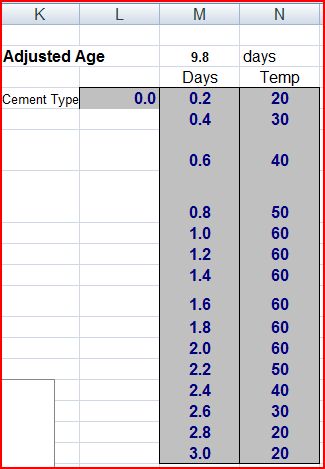
Adjusted Age input and output

Shrink() Output
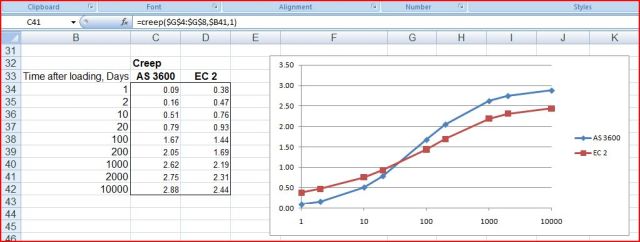
Creep() Output

Posted in Concrete, Excel, Newton, UDFs, VBA | Tagged , , , , , , , | 4 Comments

New Release of Strand7

The long awaited new release of Strand7 (R 2.4.1) appeared today.  Click below for more details:

Click for more details

Posted in Finite Element Analysis, Newton | Tagged , , | Leave a comment

350 Years of Science from the Royal Society

Trailblazing

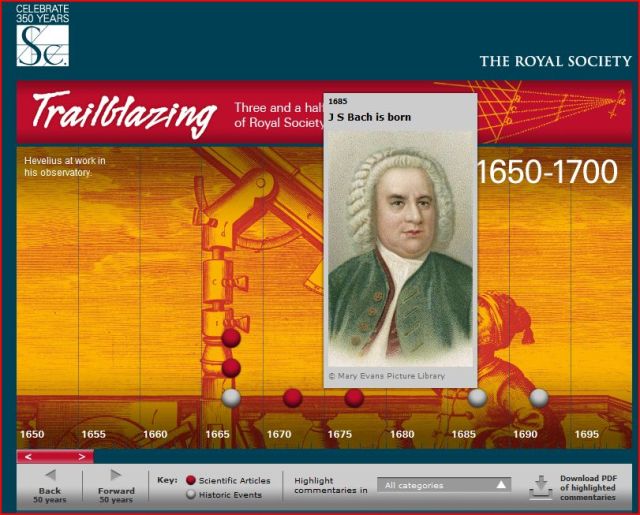
“Welcome to Trailblazing, an interactive timeline for everybody with an interest in science. Compiled by scientists, science communicators and historians – and co-ordinated by Professor Michael Thompson FRS – it celebrates three and a half centuries of scientific endeavour and has been launched to commemorate the Royal Society’s 350th anniversary in 2010.

Trailblazing is a user-friendly, ‘explore-at-your-own-pace’, virtual journey through science. It showcases sixty fascinating and inspiring articles selected from an archive of more than 60,000 published by the Royal Society between 1665 and 2010.”

Papers from The Royal Society

Posted in Newton | Tagged , | Leave a comment

A not so obvious puzzle

A nice puzzle from Tanya Khovanova’s Math Blog

Which of the shapes below is the odd one out?

Is being the only thing that isn't different more different than being different?

Posted in Maths, Newton | Tagged | 3 Comments