World’s Largest Natural Arches

Update 9th May 2013: Not in the top 10 for size, but a little known rock formation in Australia:

Kissing Rocks

From AmusingPlanet.com and The Natural Arch and Bridge Society

A natural arch is a geological formation where rocky cliffs subject to erosion from the sea, rivers or weathering forms a rock arch. Some natural arch has a stream of water flowing underneath, in which case the arch is called a natural bridge. The distinction between a bridge and arch is somewhat arbitrary. The Natural Arch and Bridge Society identifies a bridge as a subtype of arch that is primarily water-formed. By contrast, the Dictionary of Geological Terms defines a natural bridge as a “natural arch that spans a valley of erosion.” The correct method to measure an arch is also debated because of which the reported measurements often varies from source to source. Under these circumstances to prepare an irrefutable list of the world’s largest or longest or highest natural arch is impossible. Amidst this confusion new discoveries and potential candidates always keep popping up around the globe.

Natural arches are abundant in the deserts of Utah and Arizona in the United States. The Arches National Park in eastern Utah contains the largest concentration of significant natural arches in the world. As many as 2000 natural sandstone arches, including the world-famous Delicate Arch, in addition to a variety of unique geological resources and formations are found in this region.

See AmusingPlanet.com for more photos and details of the 10 biggest natural arches from around the world according to the Natural Arch and Bridge Society

Posted in Arch structures, Newton | Tagged , | 1 Comment

On Time

http://xkcd.com/1190/

The History of Time:

http://www.explainxkcd.com/wiki/index.php?title=1190:_Time

In Time:

Who Knows Where the Time Goes? (Demo version)

Posted in Bach | Tagged , , , | Leave a comment

More from the Low Countries

Two songs to go with the painting from last week:

A beautiful unaccompanied rendition of Lowlands from Anne Briggs:

Anne Briggs sang Lowlands in 1964 on her Topic Records EP The Hazards of Love. This recording was reissued on her Fellside and Topic compilation CDs, Classic Anne Briggs and A Collection. A.L. Lloyd wrote in the album’s sleeve notes:

The song is a bit of a mystery.  It has often been found in tradition in Britain and USA but always as a sailor shanty, usually sung while working at the pumps. Two distinct sets of words accompany the tune: one text tells the present story of the dead lover who returns; the other text concerns the work and pay of cotton-lumbers in the port of Mobile, Alabama.  Deceived by the latter version, some specialists declare it to be a Negro song.  More likely, it’s a fragment of an Anglo-Scots ballad, full form forgotten, that lived on among British seamen who passed it on to longshoremen in the Gulf ports. The “Lowlands” refrain may be an echo from the old ballad of The Golden Vanity. Captain Whall, best of the pioneer shanty collectors, says that in Liverpool in the old days a crew of merchant seaman was often spoken of as “the Johns” so the term “my John” in the ballad is no more personal than “my lad”.  Anne Briggs sings Lowlands not as a shanty but as a ballad, in what is probably something like its original form.

More at Mainly Norfolk: English Folk and Other Good Music

And from an early Steeleye Span LP, Lowlands of Holland:

Posted in Bach | Tagged , , | 1 Comment

GeodesiX

Another link from Alfred Vachris:

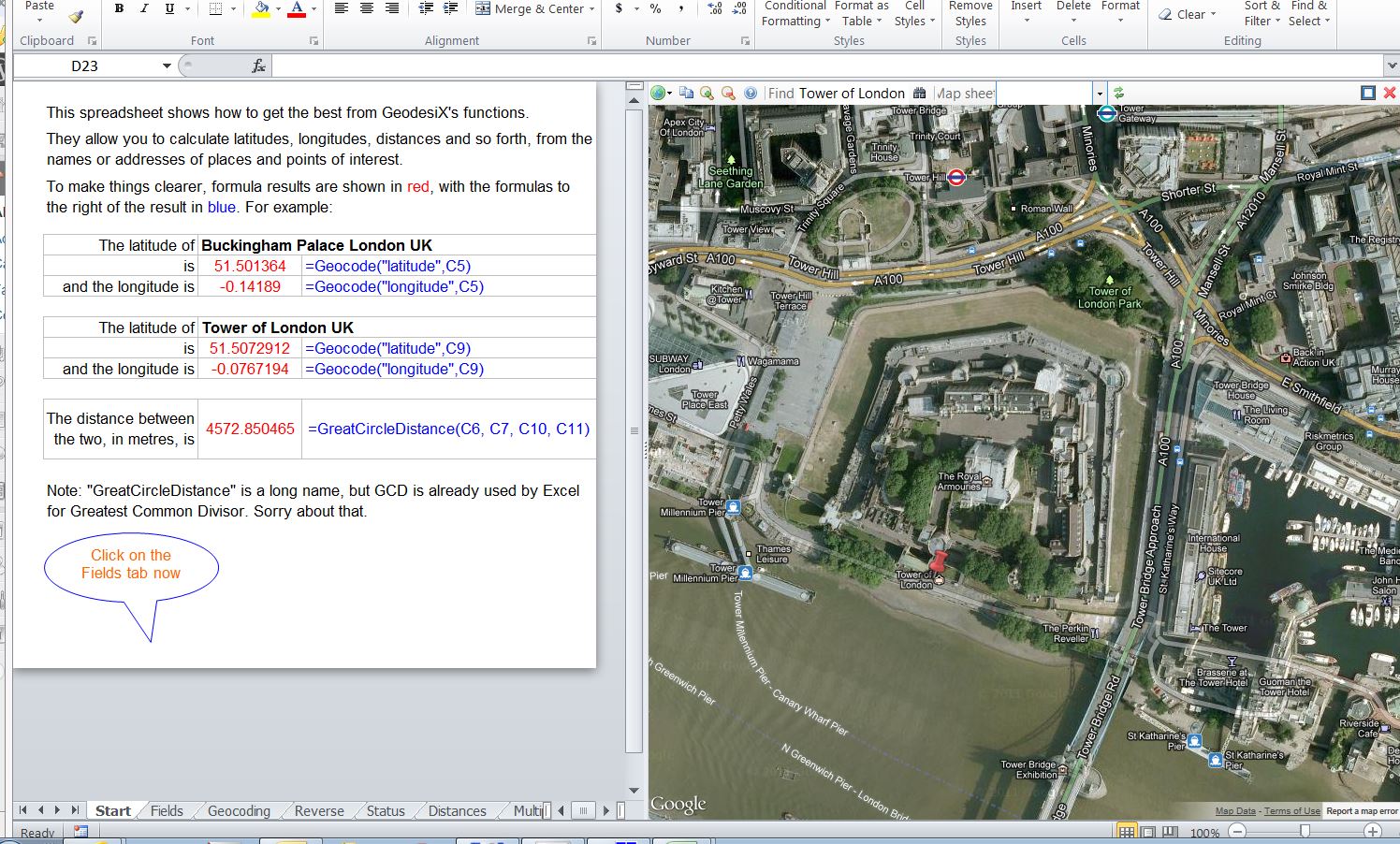
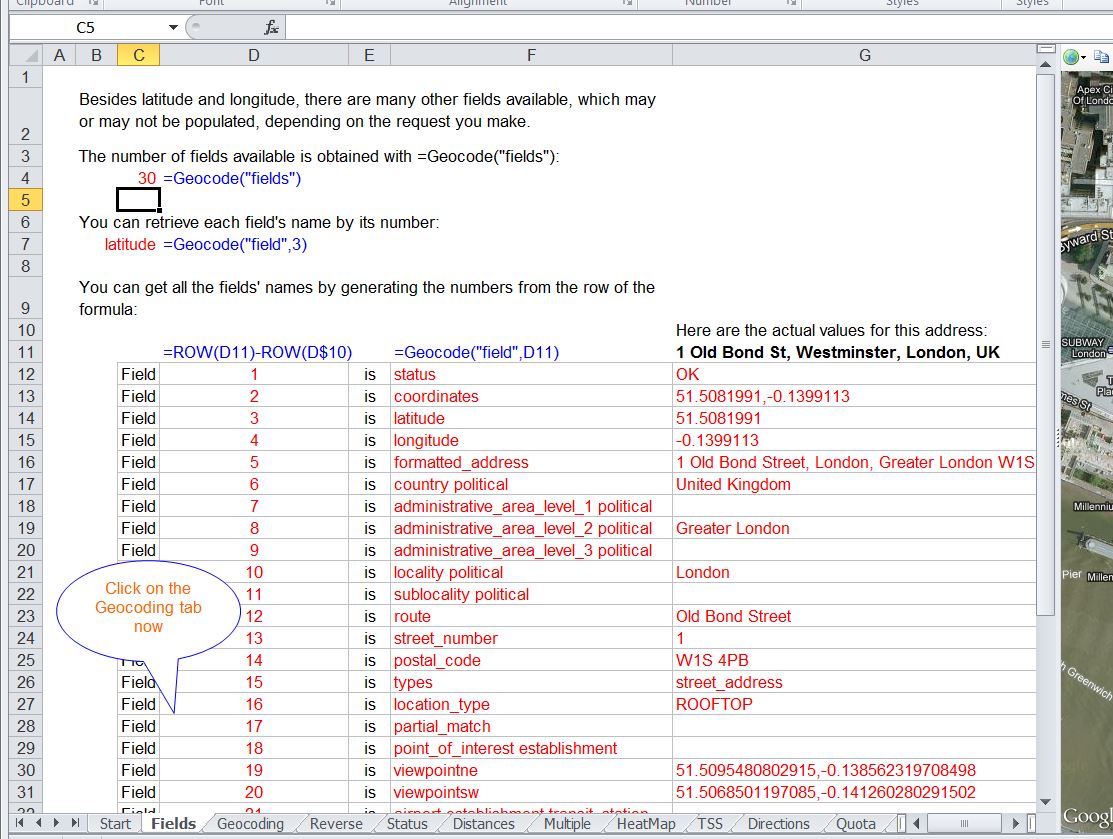
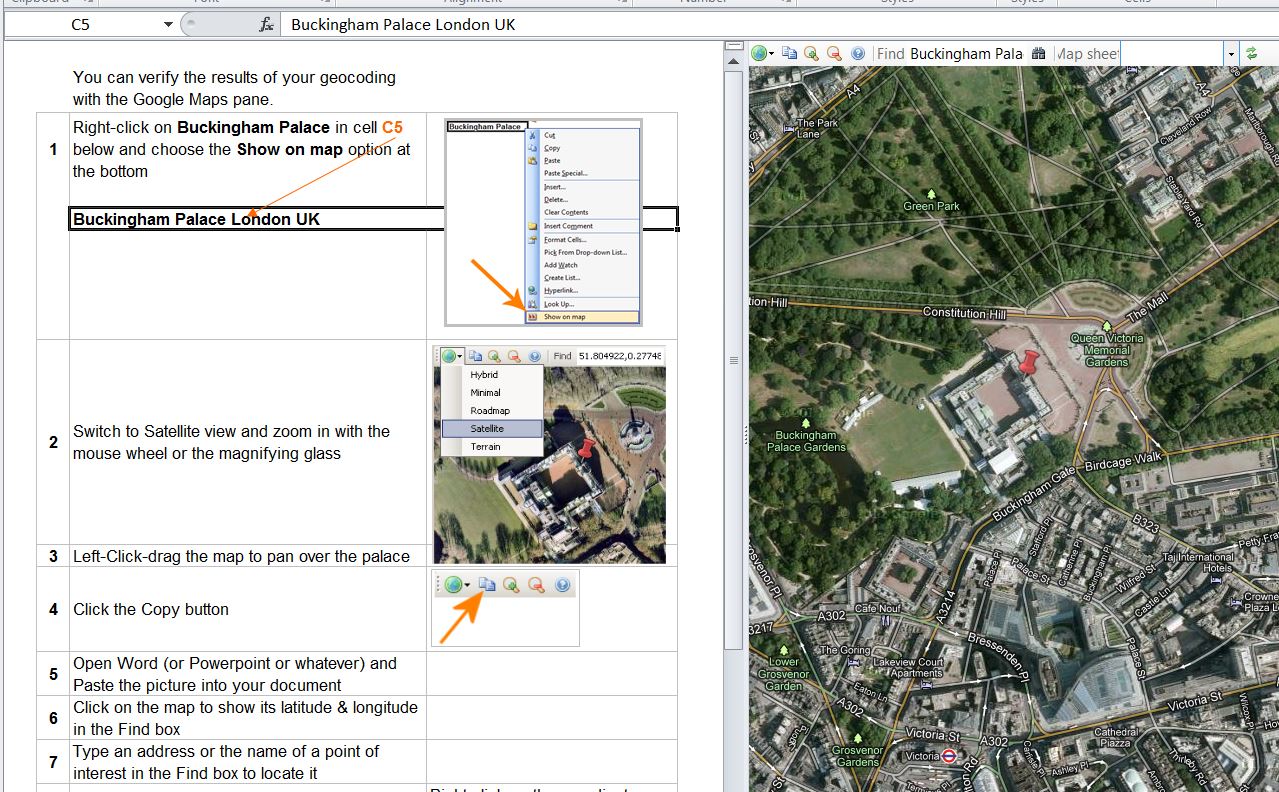
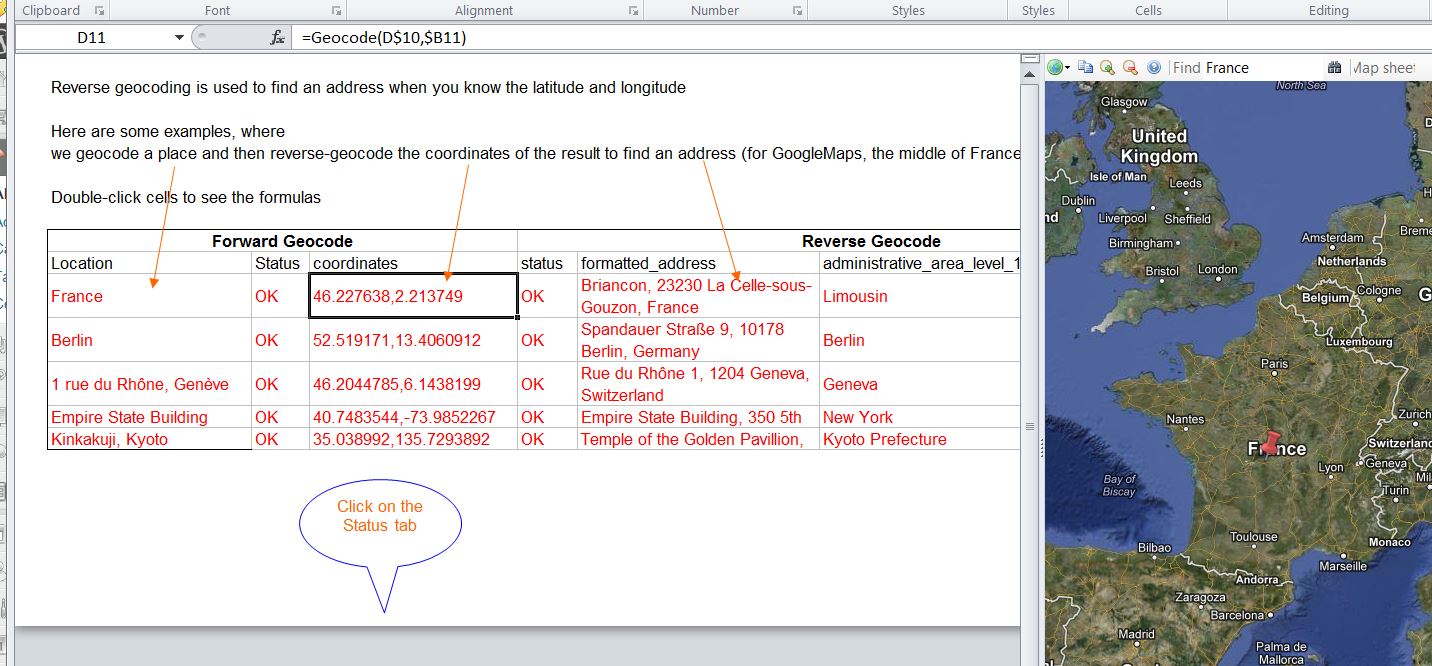
GeodesiX is is an addin for Microsoft Excel which allows you to display maps, perform forward and reverse geocoding, compute distances (Great Circle, driving, bicycling and walking) and verify your results in Google Maps, all within Excel.

It is a truly remarkable piece of software, and what’s more, it is free.

A few screen-shots below; see the link for more details and download.

Geodesix1 Geodesix2 Geodesix3

Geodesix4

Posted in Computing - general, Excel | Tagged , , | 2 Comments

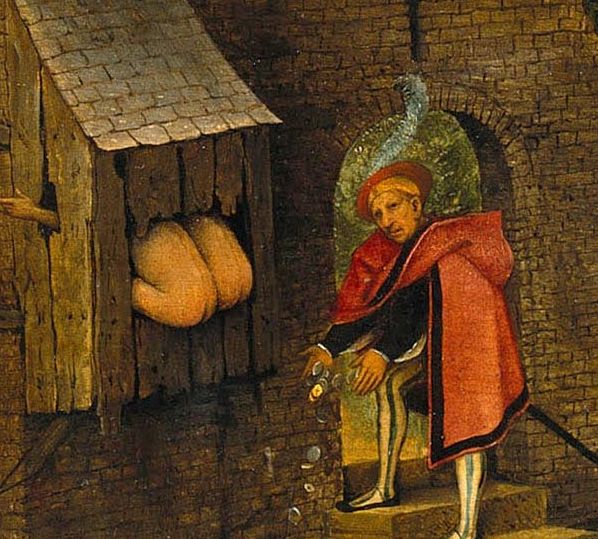
Folklore of the Low Countries …

… is a painting by Peter Brueghel the Elder, featuring depictions of more than 100 Dutch proverbs, a few of which are shown below.  It is today’s (17 April 13) Wikipedia Featured Picture, and the full hi-res image can be downloaded from: http://en.wikipedia.org/wiki/File:Pieter_Bruegel_the_Elder_-_The_Dutch_Proverbs_-_Google_Art_Project.jpg

netherlandish-proverbs1 netherlandish-proverbs2 netherlandish-proverbs3 netherlandish-proverbs4

netherlandish-proverbs5

Posted in Bach | Tagged , | 2 Comments