
The History of Time:
http://www.explainxkcd.com/wiki/index.php?title=1190:_Time

In Time:
Who Knows Where the Time Goes? (Demo version)

The History of Time:
http://www.explainxkcd.com/wiki/index.php?title=1190:_Time
In Time:
Who Knows Where the Time Goes? (Demo version)
Two songs to go with the painting from last week:
A beautiful unaccompanied rendition of Lowlands from Anne Briggs:
Anne Briggs sang Lowlands in 1964 on her Topic Records EP The Hazards of Love. This recording was reissued on her Fellside and Topic compilation CDs, Classic Anne Briggs and A Collection. A.L. Lloyd wrote in the album’s sleeve notes:
The song is a bit of a mystery. It has often been found in tradition in Britain and USA but always as a sailor shanty, usually sung while working at the pumps. Two distinct sets of words accompany the tune: one text tells the present story of the dead lover who returns; the other text concerns the work and pay of cotton-lumbers in the port of Mobile, Alabama. Deceived by the latter version, some specialists declare it to be a Negro song. More likely, it’s a fragment of an Anglo-Scots ballad, full form forgotten, that lived on among British seamen who passed it on to longshoremen in the Gulf ports. The “Lowlands” refrain may be an echo from the old ballad of The Golden Vanity. Captain Whall, best of the pioneer shanty collectors, says that in Liverpool in the old days a crew of merchant seaman was often spoken of as “the Johns” so the term “my John” in the ballad is no more personal than “my lad”. Anne Briggs sings Lowlands not as a shanty but as a ballad, in what is probably something like its original form.
More at Mainly Norfolk: English Folk and Other Good Music
And from an early Steeleye Span LP, Lowlands of Holland:
Another link from Alfred Vachris:
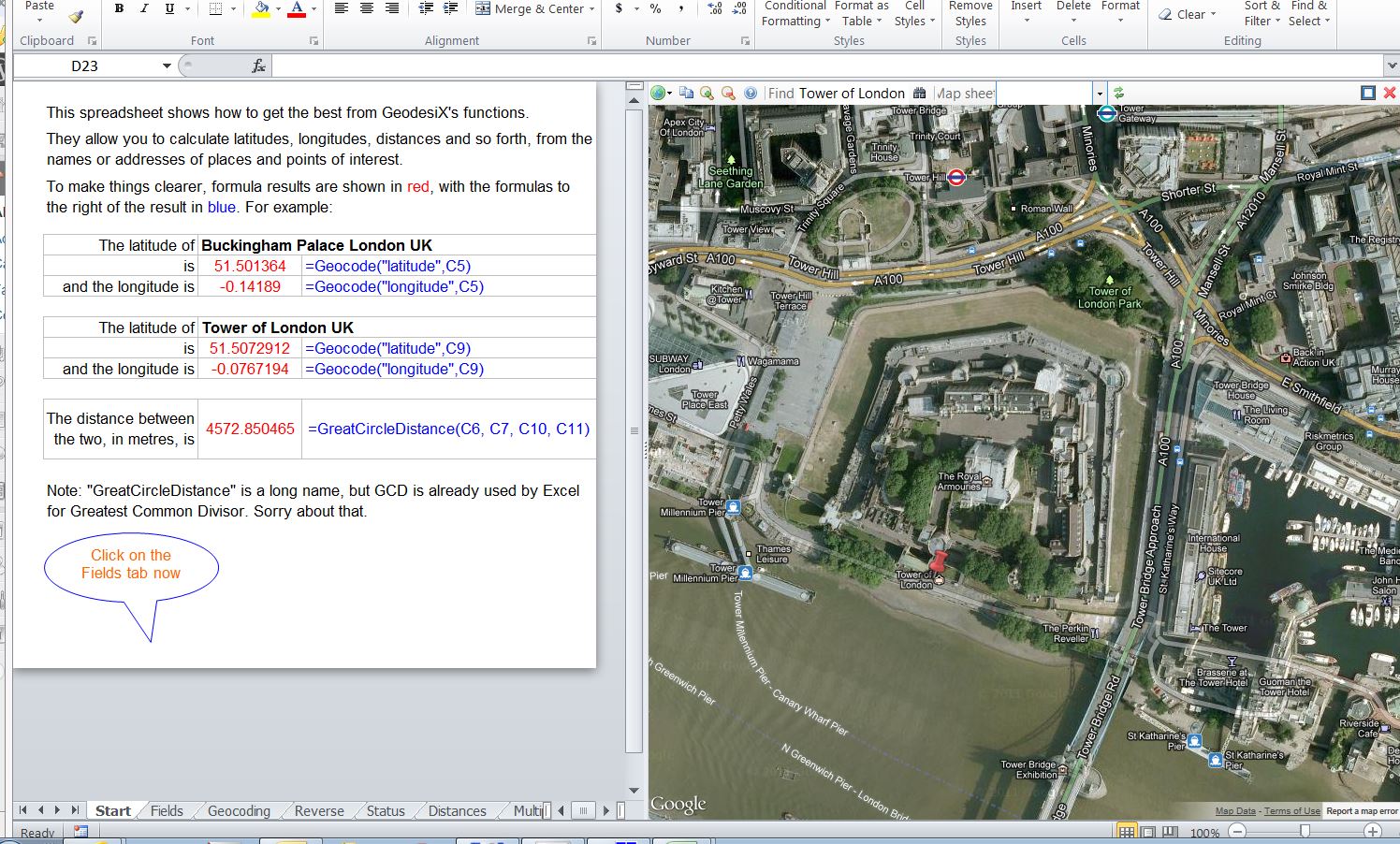
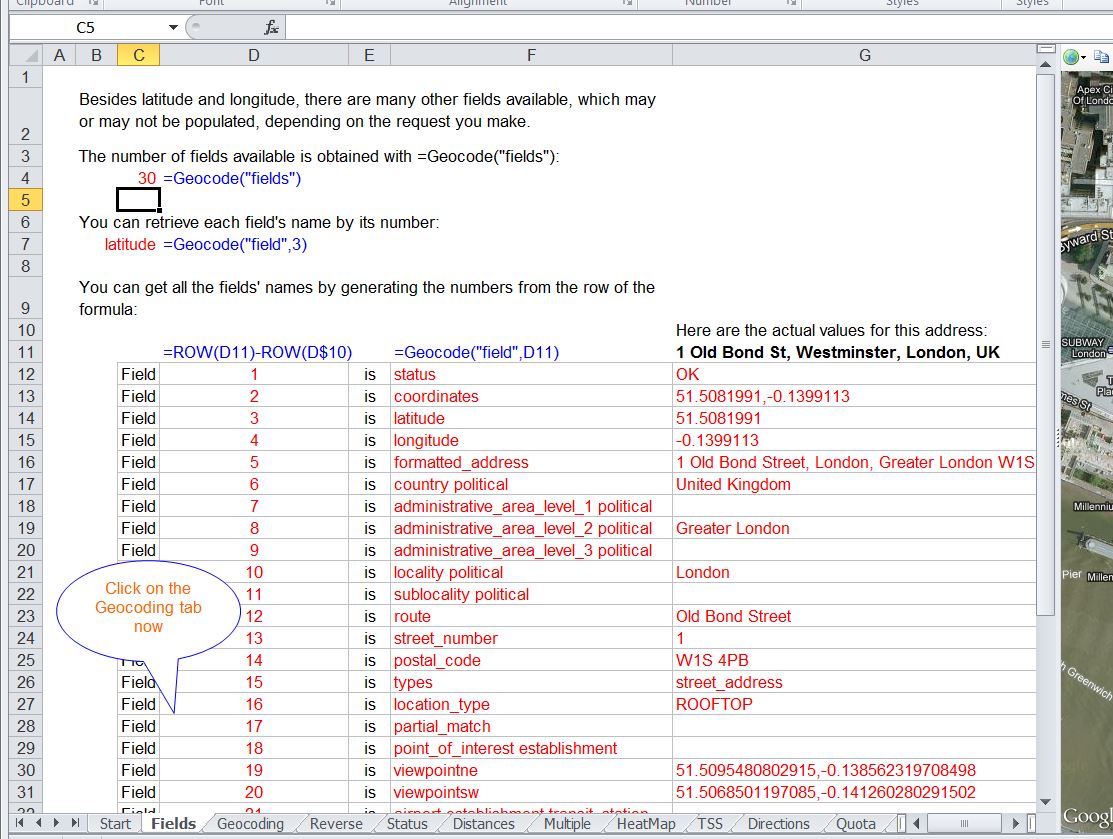
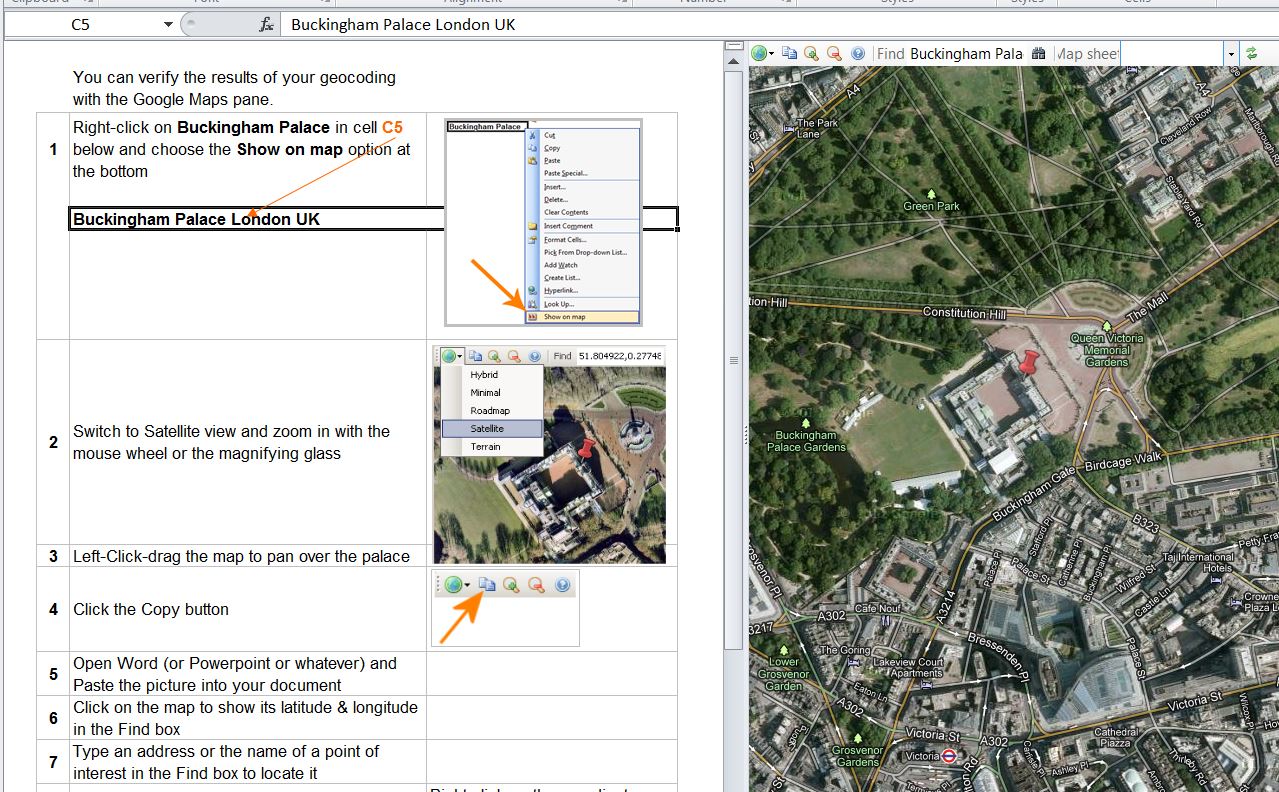
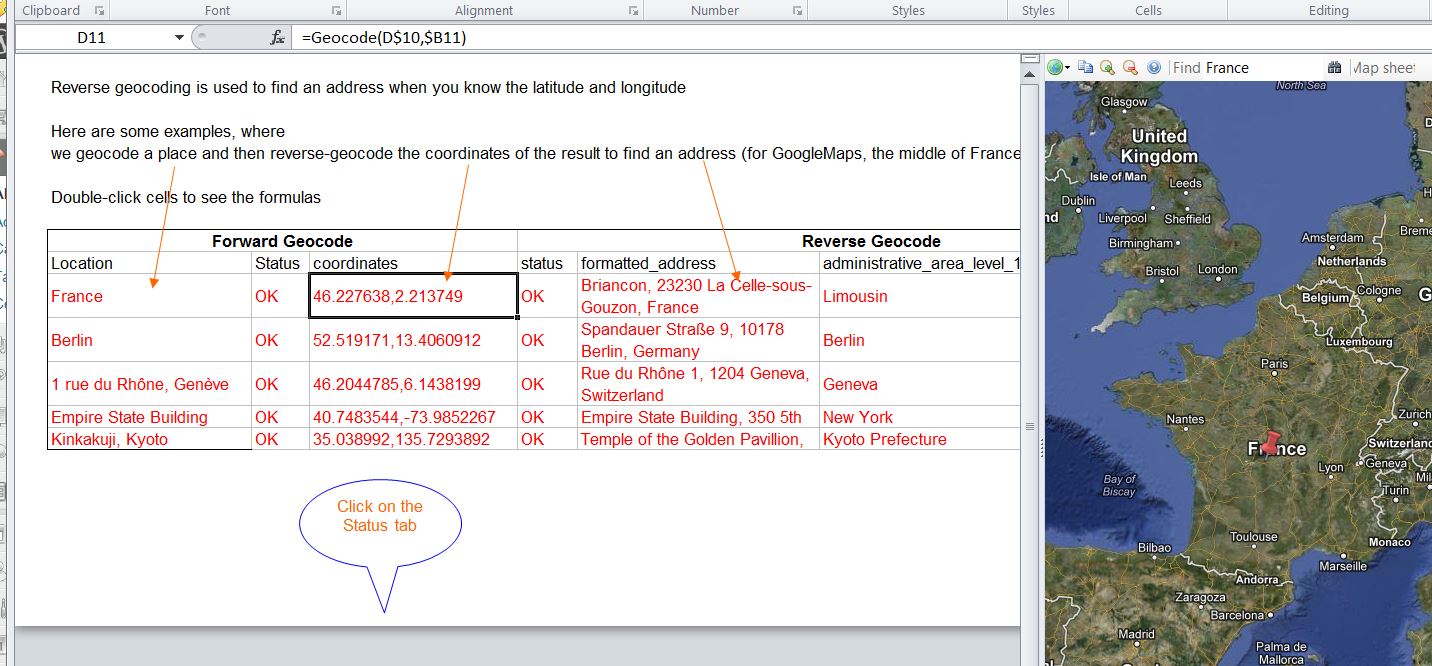
GeodesiX is is an addin for Microsoft Excel which allows you to display maps, perform forward and reverse geocoding, compute distances (Great Circle, driving, bicycling and walking) and verify your results in Google Maps, all within Excel.
It is a truly remarkable piece of software, and what’s more, it is free.
A few screen-shots below; see the link for more details and download.
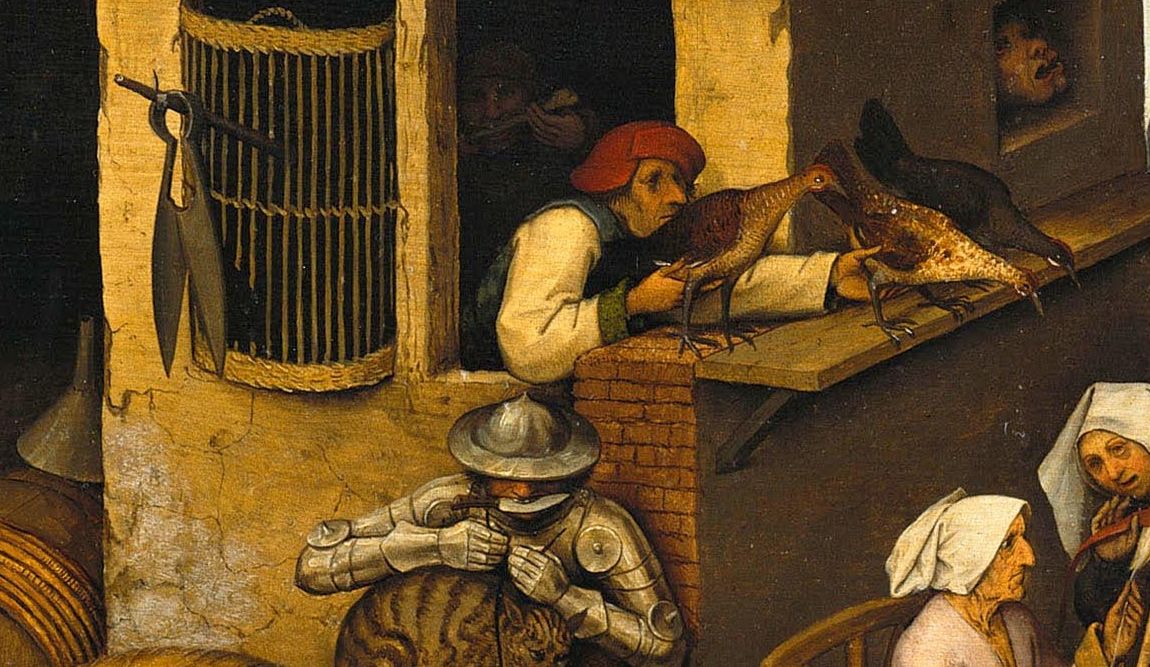
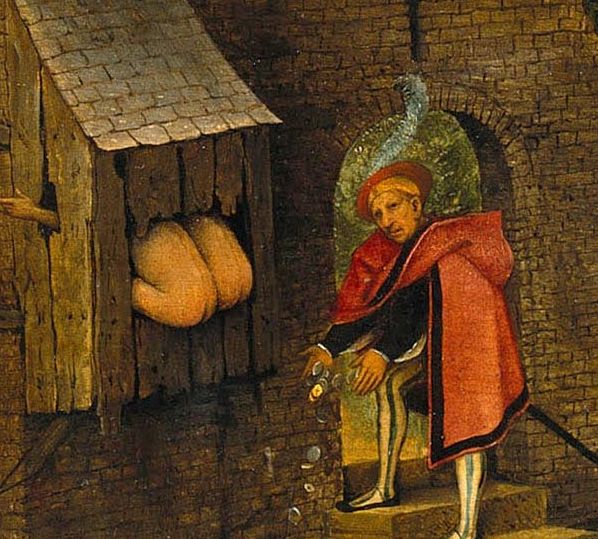
… is a painting by Peter Brueghel the Elder, featuring depictions of more than 100 Dutch proverbs, a few of which are shown below. It is today’s (17 April 13) Wikipedia Featured Picture, and the full hi-res image can be downloaded from: http://en.wikipedia.org/wiki/File:Pieter_Bruegel_the_Elder_-_The_Dutch_Proverbs_-_Google_Art_Project.jpg



Following a discussion at Eng-Tips, I have modified the section properties spreadsheet (presented here) so that section properties can be found for groups of defined shapes, including provision for translation and rotation of each shape, and application of different E values.
The new spreadsheet may be downloaded from Section Properties07.zip, including full open source code.
The procedure is:
Holes inside a shape may be defined using Elastic Modulus values of 1 and -1 for the shape and holes respectively.
The grouped shapes may be plotted on the “Coords_Group” sheet, which also recalculates section properties, based on end point coordinates. Note that properties on the “Coords_Group” sheet will be slightly different from those shown in the Group Properties table for any shape including curves because the calculation on that sheet models curves as a series of short straight lines. For any polygonal shape the results should be exactly the same (within machine precision).
Examples of input and results are shown in the screen-shots below.

Create 6 equilateral triangles, offset so that the tip is at the origin, and rotated through 60 degree increments

Resulting hexagon

Create new group with 0.5 dia. circle
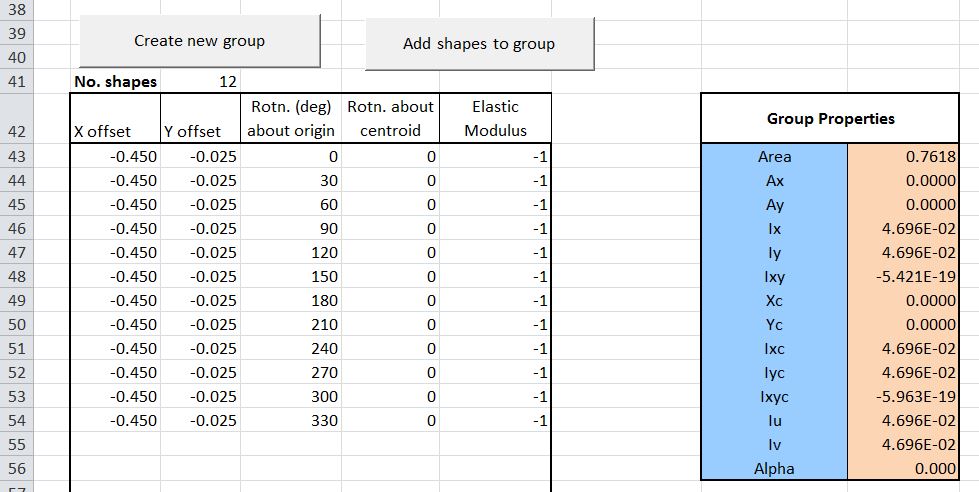
Add 25 mm diameter holes at 0.45 m from the centre with 30 degree increment
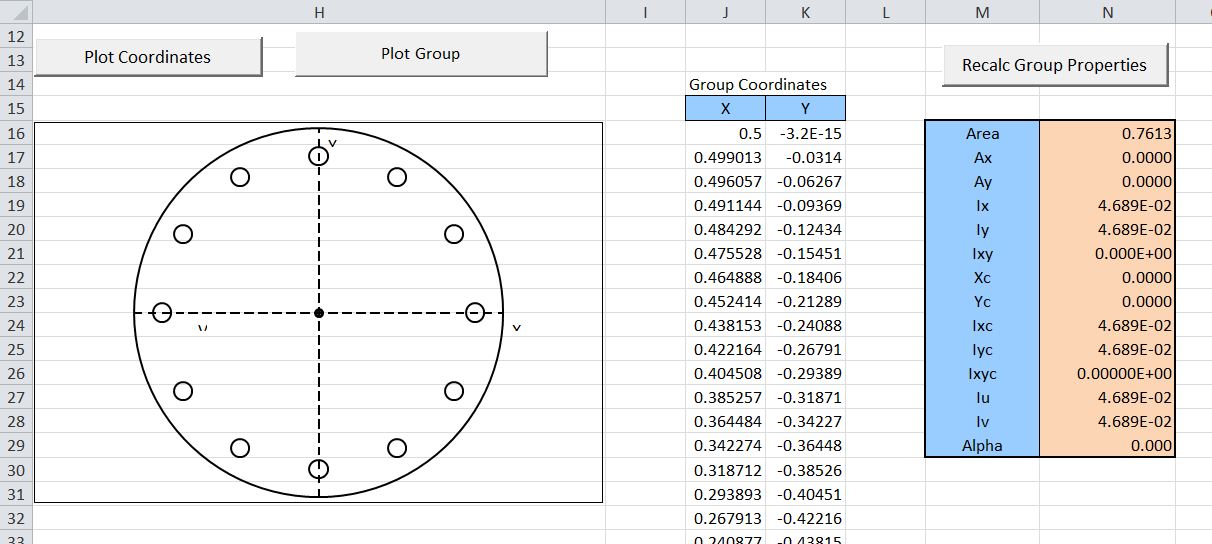
Resulting group and section properties

Add 4 equal angles to an I section; offset and rotated to I section internal corners

Resulting group and section properties


 Newton Excel Bach, not (just) an Excel Blog
