Charts for discussion

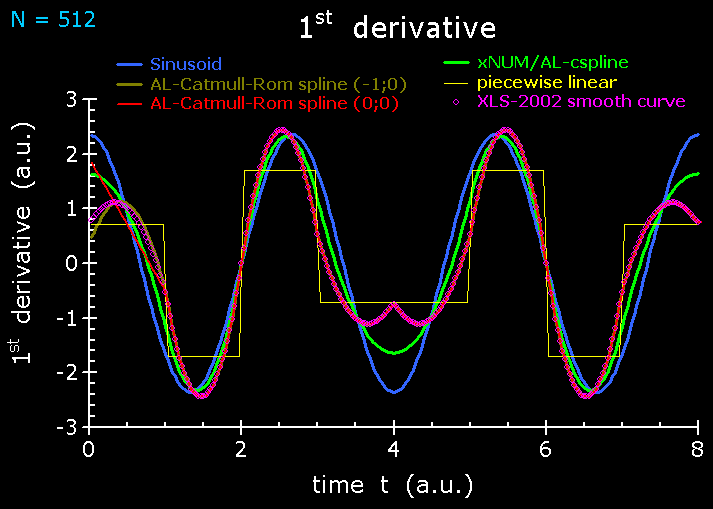
See the comment from Georg Ströhlein under 2D Spline Interpolation with ALGLIB

Here are the charts referred to:

drgst__aliasing-1deriv-512.png

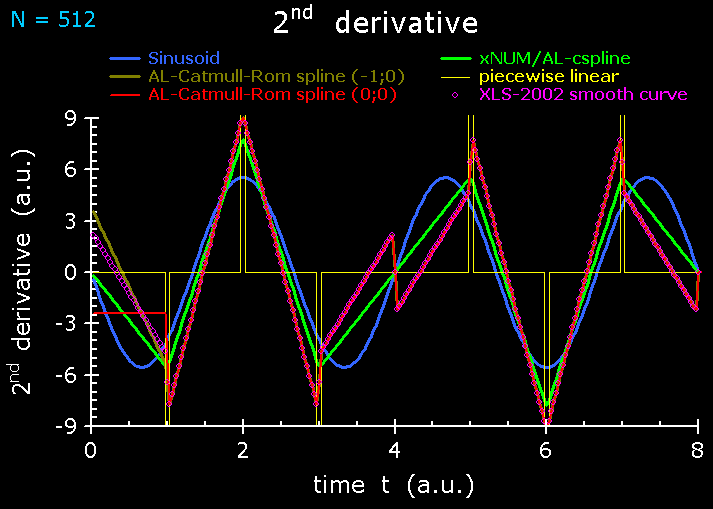
drgst__aliasing-2deriv-512

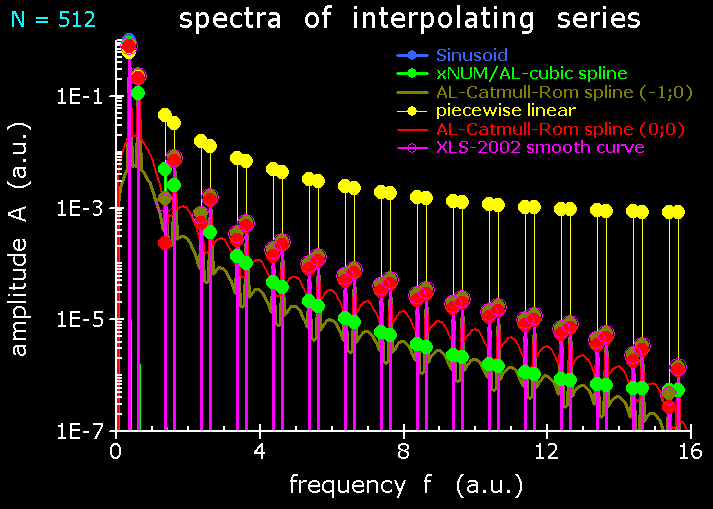
drgst__aliasing-spec-512all

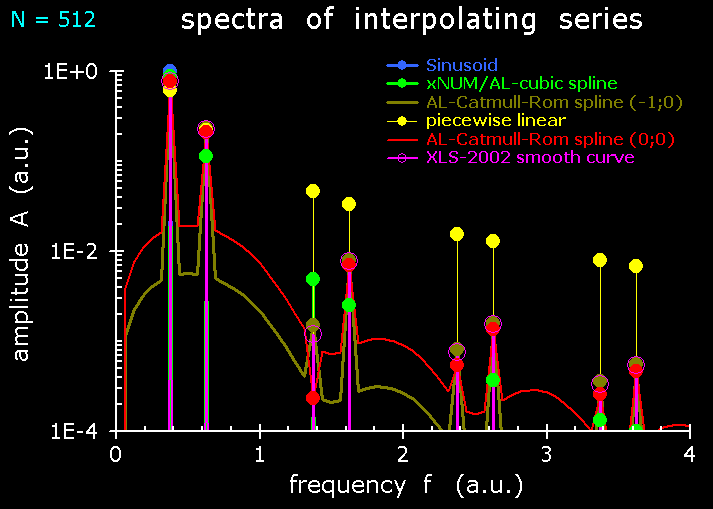
drgst__aliasing-spec-512detail

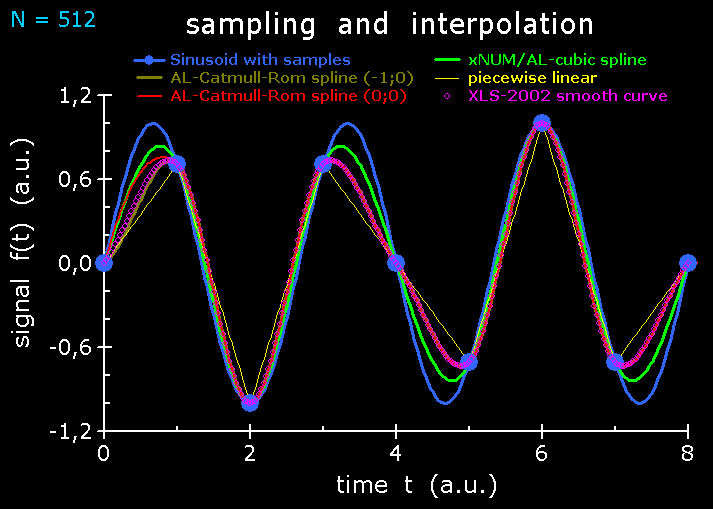
drgst__aliasing-time-512

Posted in Charts, Excel, Maths, Newton | Tagged , | 1 Comment

3 year report

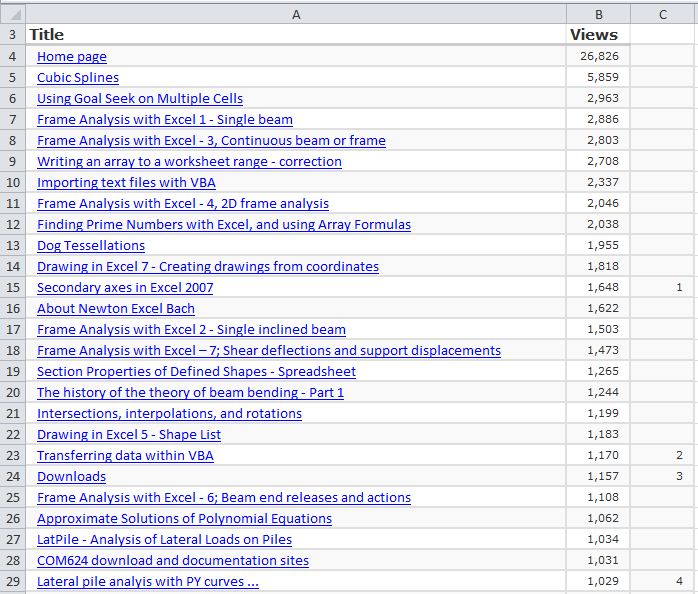
As in previous years, I have downloaded the statistics for this blog for the previous year, and pasted them into a worksheet.  The link to each post is preserved in the spreadsheet, so it makes a convenient index to what has been posted over the year, which can be downloaded here

Most viewed posts - click for full size view


Of the 2010 posts, the most popular overall was Secondary axes in Excel 2007.  The most popular in the Newton category was Lateral pile analyis with PY curves …, and the most popular in the Bach category was coffeescup a.k.a. lemonflower

From the “deserving but sadly neglected category” I have chosen:

Newton: The hole through the middle of the Earth – filled with air

Excel:  Faster Ferns

Bach: Danny Thompson & Zoe Rahman …

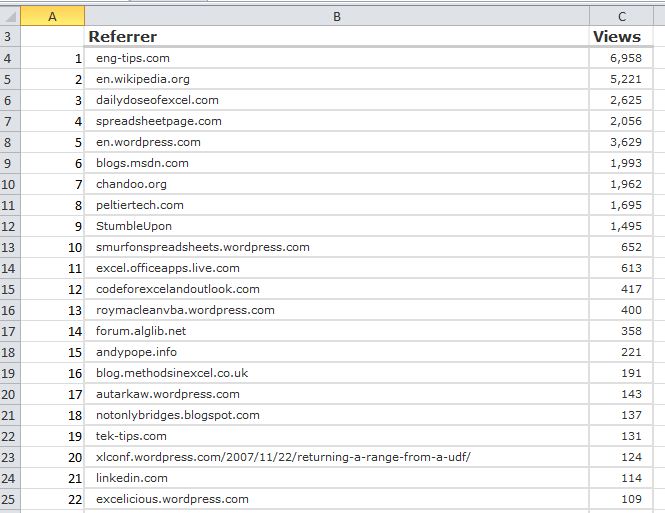
Most frequent referrers to this site came from:

Referrers to Newton Excel Bach

Thanks to those and all others with links to this site.

Posted in Excel | Tagged | 4 Comments

ALGLIB linear and polynomial fitting functions

As promised here: Fitting high order polynomials this post presents details of four Excel User Defined Functions (UDFs) linking with ALGLIB functions for least squares fitting of linear and polynomial functions.  The new functions are:

AL_Linest:

AL_Linest: Simple linear least squares fit

AL_LinestCW:

AL_LinestCW: Weighted and constrained linear least squares fit.

AL_PolyFit:

AL_FitPoly Simple polynomial least squares fit

and AL_PolyFitCW:

AL_FitPolyCW Weighted and constrained polynomial least squares fit.

These functions have been added to the AL-Spline-Matrix spreadsheet, which may be downloaded from:

AL-Spline-Matrix03.zip or AL-Spline-Matrix07.zip (recommended version for anyone running XL 2007 or later).

Output from the new functions is shown in the screen-shots below:

AL_Linest and AL_LinestCW Output

AL_PolyFit and AL_PolyFitCW Output

The AL_Linest function offers no obvious advantage over the built in Excel Linest function, but the other three functions have significant extra functionality:

  • AL_LinestCW allows weighted and constrained linear least squares fitting.
  • AL_Polyfit and AL_PolyfitCW are specifically written to fit a polynomial function of any order, and appear to be much more stable with high order polynomial functions than any of the built-in methods in Excel.
  • In addition AL_PolyfitCW allows constrained and weighted fitting.

The current VBA version of ALGLIB returns the polynomial data in barycentric form, rather than polynomial coefficients, and the Excel UDF converts this to interpolated function values using the ALGLIB BarycentricCalc function.  The latest version of the library (3.2) will also return the polynomial coefficients, but this version has yet to be released in VBA.  All versions of the ALGLIB library may be freely downloaded from the ALGLIB site.

Posted in AlgLib, Excel, Maths, Newton, UDFs, VBA | Tagged , , , , , , | 5 Comments

Two more letters

I can’t help feeling that I was a little unfair to Douglas Hofstadter in my last post, so as these were hypothetical letters, I will travel back in time, and send two more, enquiring whether a reductionist or a holistic approach is the better way to approach questions of Life, the Universe and Everything. Here is the text of both hypothetical letters:

Most Excellent Wordsmith,

Holism or reductionism?

Master of the (not (just) an) Excel WordPress-blog

On this occaision I suspect that Douglas Adams would have decided to answer the question in the form of a full length book, called The Trout of Indecision, but being unable to decide whether it should be yet another addition to the Hitchhiker’s Trilogy (with the theme of not being able to see the school for all the fish), or a Dirk Gently story (with the theme that there are interconnections between all things, but some interconnections are much more interesting than others), he would miss deadline after deadline, until sadly and finally being swept up by the final deadline that comes to us all.

Douglas Hofstadter on the other hand would reply promptly with a single two letter word:
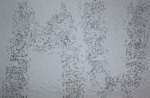
clearly intended to be read three times, the first and last as a phonetic contraction of the TLA, MEW, but what is the meaning of the body of the letter?

Fortunately my imaginary infinite resolution monitor works well on hypothetical documents, and I am able to zoom in on MU, and sharpen it, revealing:
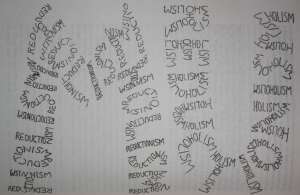
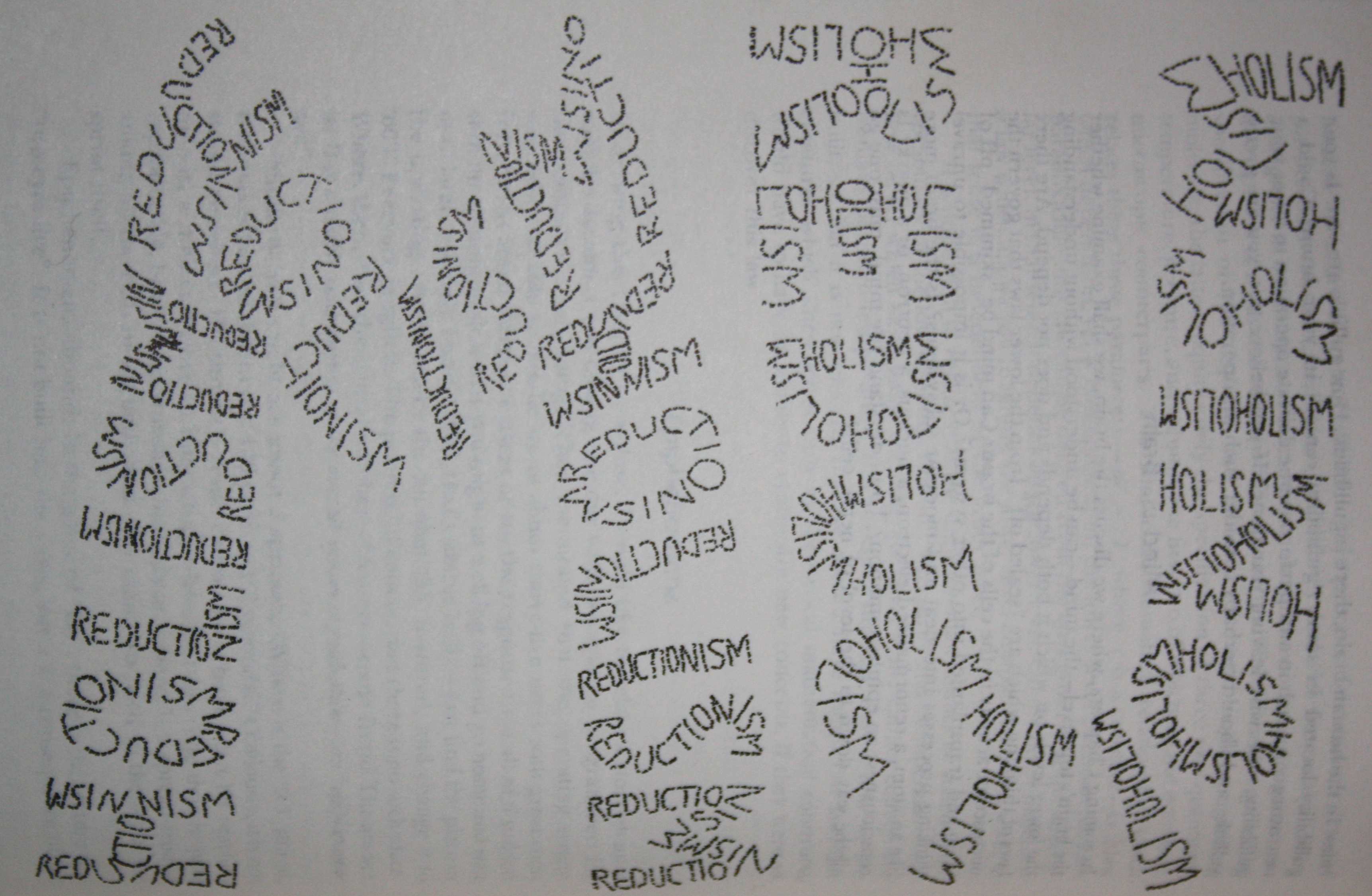
We can now see that the M is made up of three copies of the word “HOLISM”, and the U by the word “REDUCTIONISM”, and if we zoom still further, we see that:

each letter of “HOLISM” is made up of the word “REDUCTIONISM”, and that:
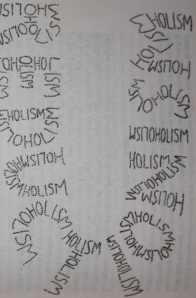
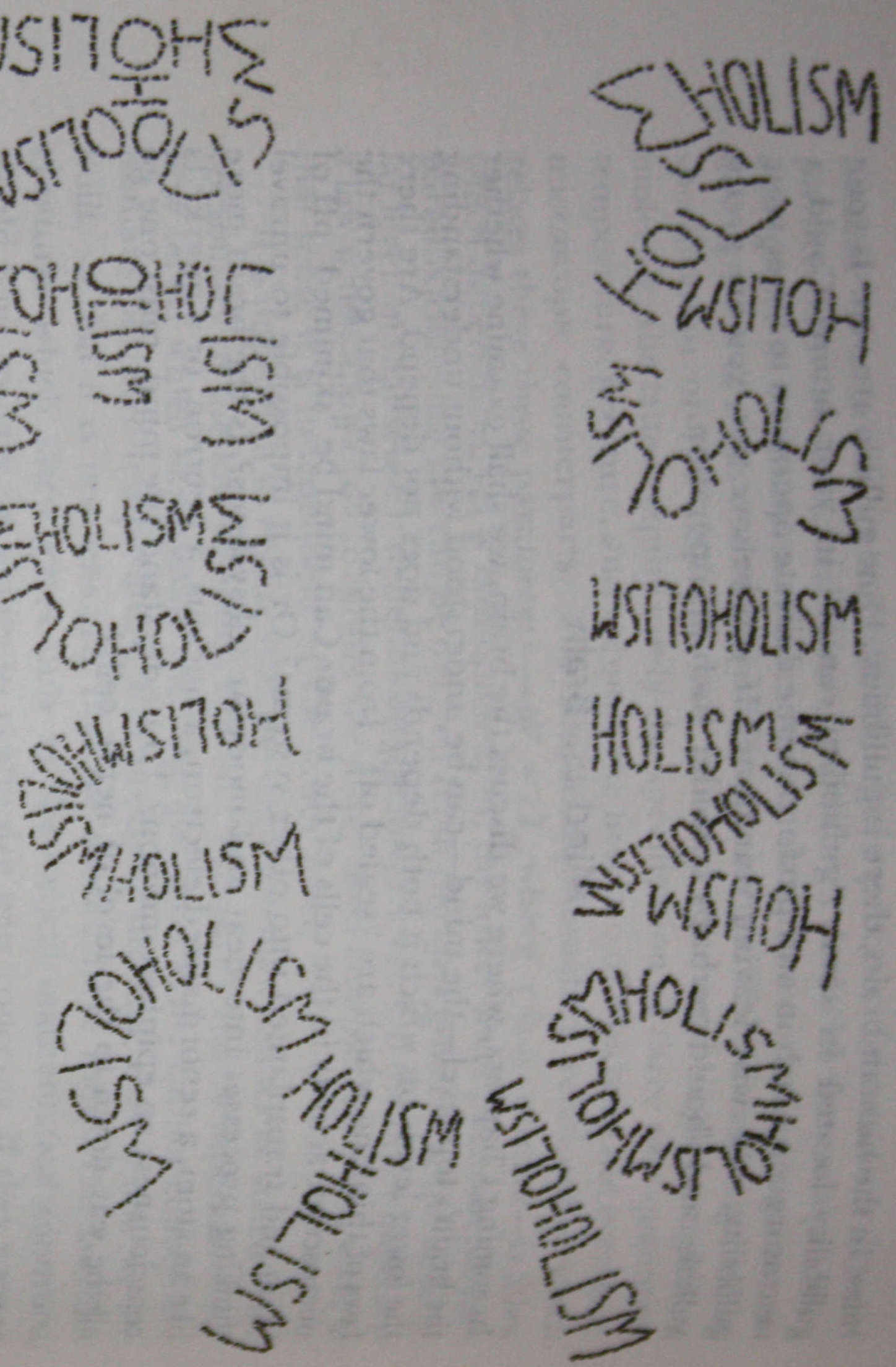
each letter of reductionism is made up of the word “HOLISM”.  And if we zoom still further we see that:
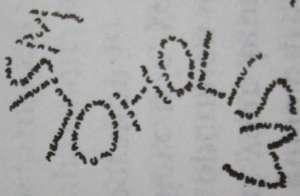
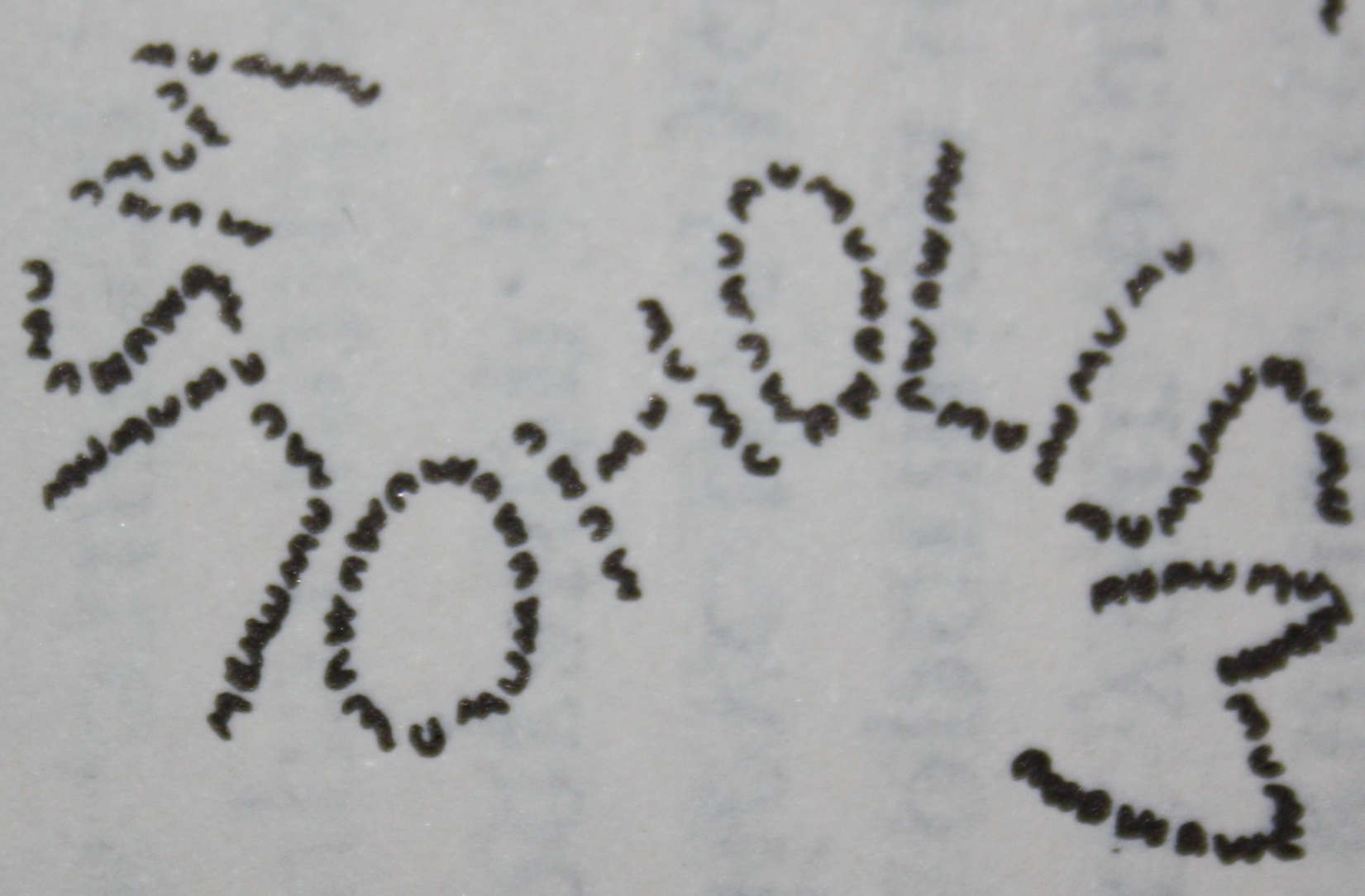
each letter of the smaller words is made up of multiple copies of the word:
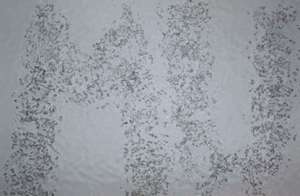
…  and so on.

All images in this post are based on the original from Douglas Hofstadter’s “Godel, Escher Bach

Some nice links about Godel, Escher, Bach, and Godel, Escher, Bach can be found at: Godel, Escher, Bach

Posted in Newton | Tagged , , , , , , | 2 Comments

A Tail of Two Letters …

… or the importance of being Douglas.

I’m currently reading Douglas Hofstadter’s “I am a Strange Loop”, which has reminded me of two hypothetical imaginary letters that I never sent (and now never will) to Mr Hofstadter and Douglas Adams.

The letters were identical, and were enquiring whether the reader was aware of the importance of brevity in all manner of written literary endeavours. Here is the text:

Doug,

Dig it?

Doug

If he had the time and inclination to accept the brief, I feel sure that Douglas Hofstadter would respond with a lengthy treatise, full of witty self referential references to all manner of brief entities, which would alternately delight and mystfy, explaining that yes, he was aware of, and always practiced at length, the art of being brief.

Douglas Adams’ hypothetical response would have been a little shorter, and I have reproduced it in full below:

Dug!

This is to be read three times, salutation, body, and signature, all in one three letter word.

Read it again and it is documentary evidence that what the author says is true; surely the World’s shortest quality document, complying with ISO 9001.

Posted in Newton | Tagged , , , | 1 Comment