Trigonometric Functions – dll

I have converted the trigonometric functions presented in this earlier post into a Fortran dll.  The dll and associated spreadsheet and add-in files can be downloaded from here.

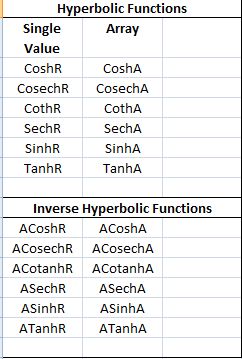
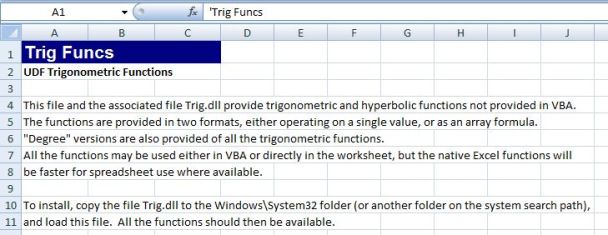
This file and the associated file Trig.dll provide trigonometric and hyperbolic functions not provided in VBA.
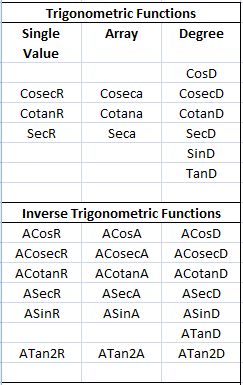
The functions are provided in two formats, either operating on a single value, or as an array formula.
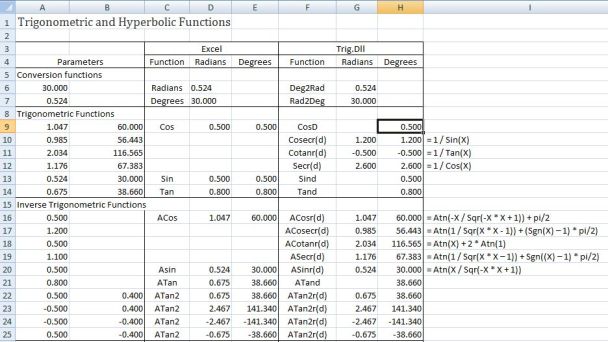
“Degree” versions are also provided of all the trigonometric functions.
All the functions may be used either in VBA or directly in the worksheet, but the native Excel functions will be faster for spreadsheet use where available.
To install simply copy the dll file to your Windows/System32 folder and open the Trig Funcs.xls or xlsb file.
Introduction
Introduction

List of Trig Functions

List of Trig Functions

List of Hyperbolic Functions
List of Hyperbolic Functions

Trig Function Examples
Trig Function Examples

Hyperbolic Function Examples
Hyperbolic Function Examples
Posted in Excel, Link to dll, Maths, Newton, UDFs | Tagged , , , , , , | 2 Comments

Elegant proofs 3

At The Math Less Travelled it says:

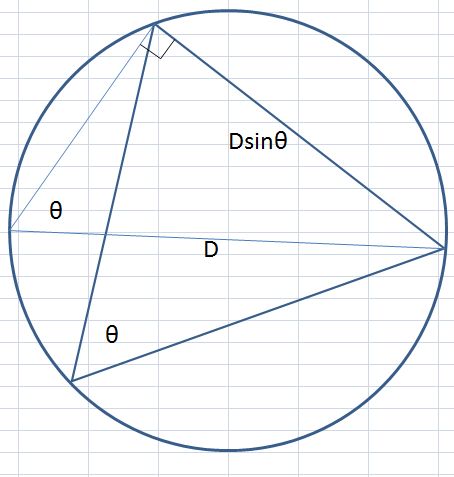
“Did you know that the ratio between the side of any triangle and the sine of the opposite angle is equal to the diameter of the triangle’s circumcircle? I didn’t! I just learned it today when researching the law of sines. All that time spent on the law of sines in high school, and no one ever bothered to tell me that in any triangle, not only are all the ratios between side lengths and sines of opposite angles equal to each other, they are also equal to something else interesting — namely, the diameter of the circumcircle!

Among other things, this means in particular that if you inscribe any angle in a circle with diameter one, the length of the chord it subtends is equal to the sine of the angle:”

Follow the link above for a very neat wordless proof of this proposition, and see below for my own, possibly even neater, proof, using exactly the same number of words:

sinproof

Posted in Maths, Newton | Tagged , , | Leave a comment

Another old bridge, and some newer ones

A further collection of notable bridges from Southern Germany and Austria.

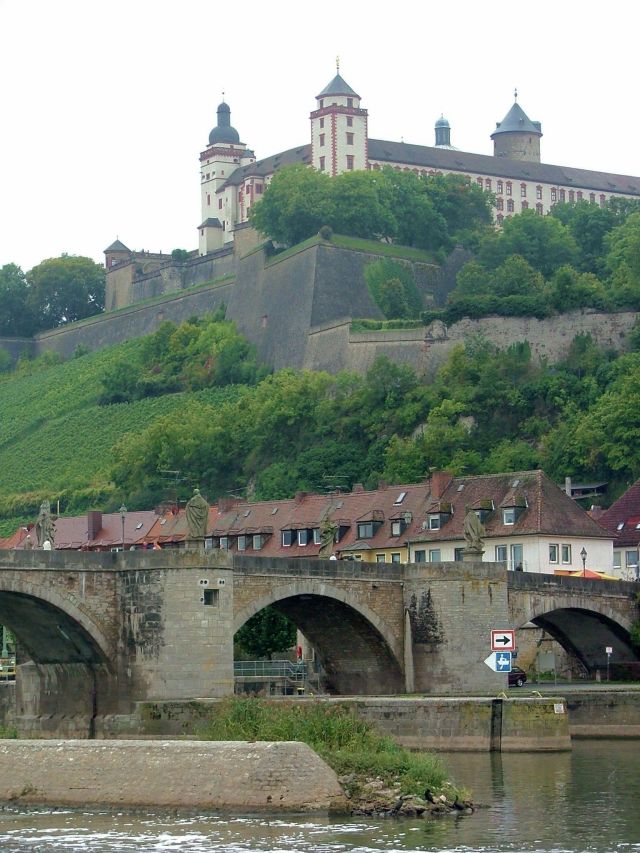
Würzburg’s Old Main Bridge (Alte Mainbrücke) was built 1473–1543 to replace the destroyed Romanesque bridge from 1133. It was adorned from 1730 on in two phases with well-known statues of saints and famous persons.

Wurzburg Old Bridge and the Fortress Marienberg

Wurzburg Old Bridge and the Fortress Marienberg


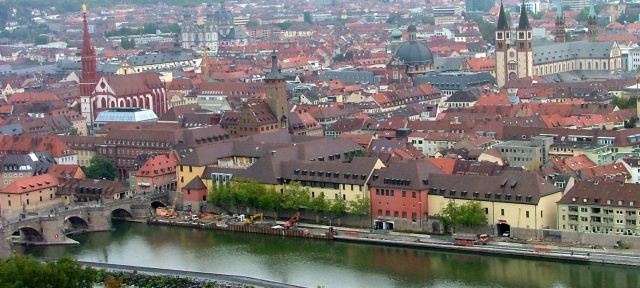
Wurzburg Old Bridge and the city from the fortress

Wurzburg Old Bridge and the city from the fortress


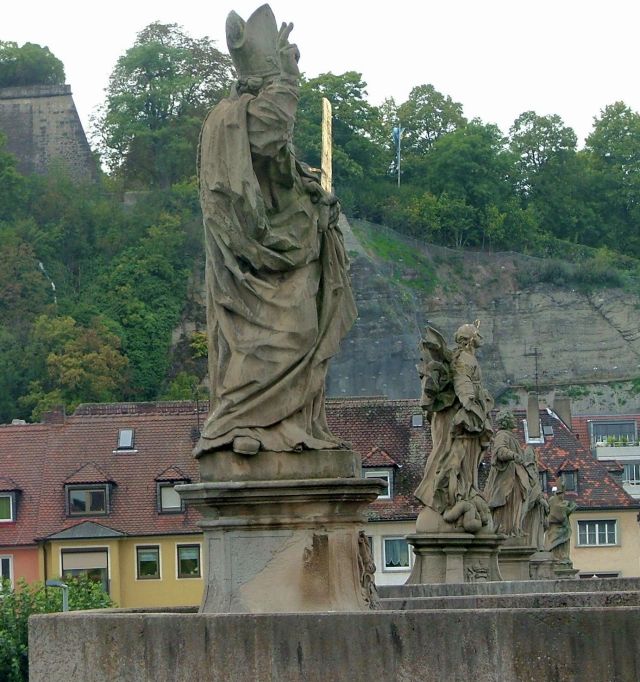
Statues on the Wurzburg Old Bridge

Statues on the Wurzburg Old Bridge

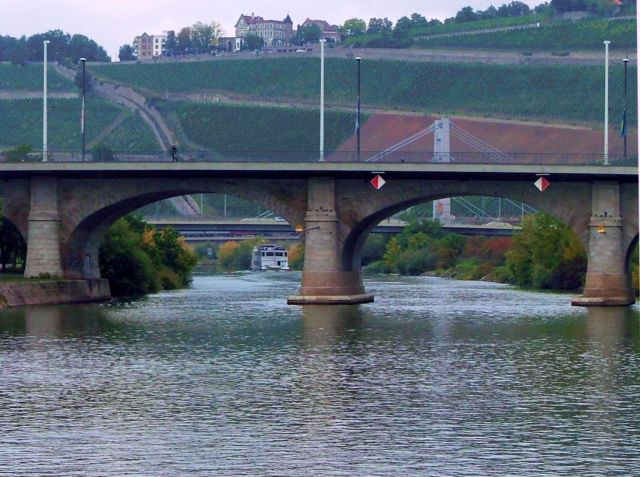
 The concrete arch bridge upstream of the old bridge at Wurzburg is also an elegant structure, but one about which I have not been able to find any details.

A newer arch bridge at Wurzburg

A newer arch bridge at Wurzburg


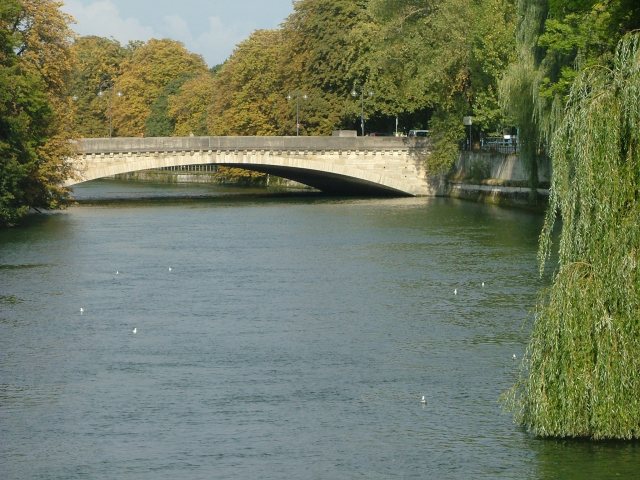
The Ludwigsbrucke is immediately oustside the Deutsche Museum in Munich, which includes, amongst many other exhibits, an interesting bridge exhibition.  The Ludwigsbrucke was constructed in 1936 with a span of 43 m, and was an early example of the use of precasting, with the arch soffit being formed from precast concrete, which was used as permanent form-work for the main concrete structure.

Ludwigsbrucke, Munich

Ludwigsbrucke, Munich


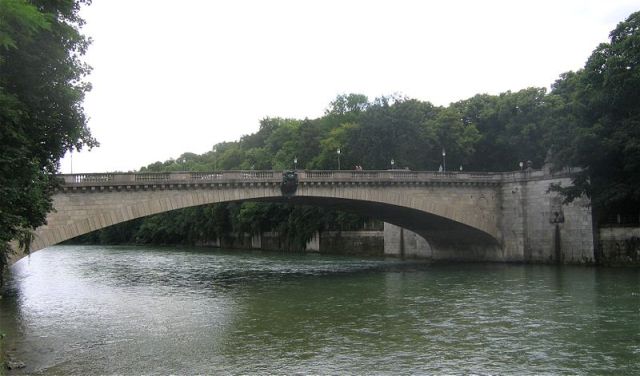
The nearby Luitpoldbrucke is similar in appearance, but is larger and older.  Built in 1901 with 63 m span.

Luitpoldbrucke, Munich

Luitpoldbrucke, Munich

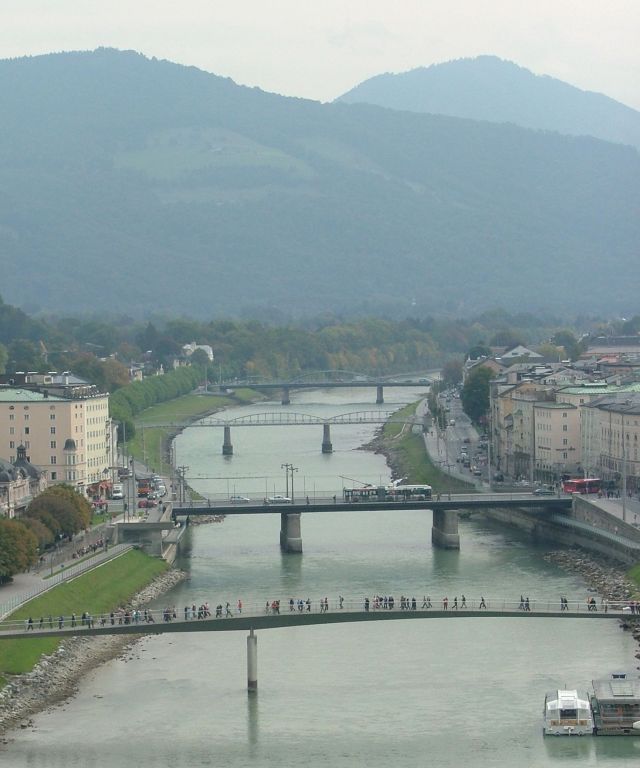
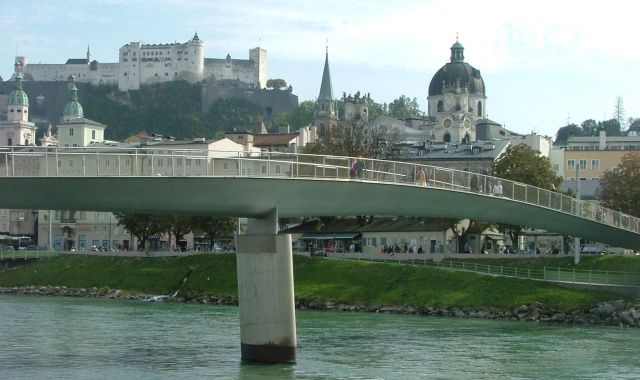
 Of the bridges crossing the Salzach River at Salzburg it is the Mozart Footbridge (2nd from top) which is the most famous (having been filmed together with young Trapps practicing their scales in the Sound of Music), but to my mind the recent concrete footbridge is the more attractive.

Five bridges crossing the Salzach River at Salzburg

Bridges crossing the Salzach River at Salzburg

Footbridge over the Salzach River, Salzburg

Footbridge over the Salzach River, Salzburg

Posted in Arch structures, Historic Bridges, Newton | Tagged , , , | Leave a comment

Trigonometric Functions in VBA – Update

In this post from February a set of VBA trigonometric functions were presented, using the derivations given on the Microsoft Developer Network site:

Derived Math Functions

Unfortunately two of the functions were wrong; the correct versions are shown below:

Inverse Secant Arcsec(X) = Atn(1 / Sqr(X * X – 1)) + Sgn((X) -1) * (2 * Atn(1))
Inverse Cosecant Arccosec(X) = Atn(1 / Sqr(X * X – 1)) + (Sgn(X) – 1) * (2 * Atn(1))

I have corrected the spreadsheet, which can be downloaded from: VBA Trig Functions

Does anyone know how I can notify Microsoft of the error?

Posted in Excel, Maths, Newton, UDFs, VBA | Tagged , , | 5 Comments

The Moon Smiles on Brisbane Water

Astronomy Picture of the Day for Friday Dec 5th:

Explanation: At sunset, Monday’s western sky showed off stunning colors and dramatic clouds reflected in Brisbane Water on the Central Coast of New South Wales, Australia. It also featured the remarkable conjunction of the crescent Moon, Venus, and Jupiter forming a twilight smiley face. While the gathering of the two bright planets and Moon awed skygazers around planet Earth, astronomer Mike Salway reports taking special pains to record this gorgeous view, braving mosquitos and rain squalls along a soggy shore. His southern hemisphere perspective finds brilliant Venus at the highest point in the celestial grouping. For now, a bright pairing of Venus and Jupiter continues to dominate the western horizon after sunset but the Moon has moved on and tonight is near its first quarter phase. ”

And something completely different.

Posted in Newton | Tagged , | Leave a comment